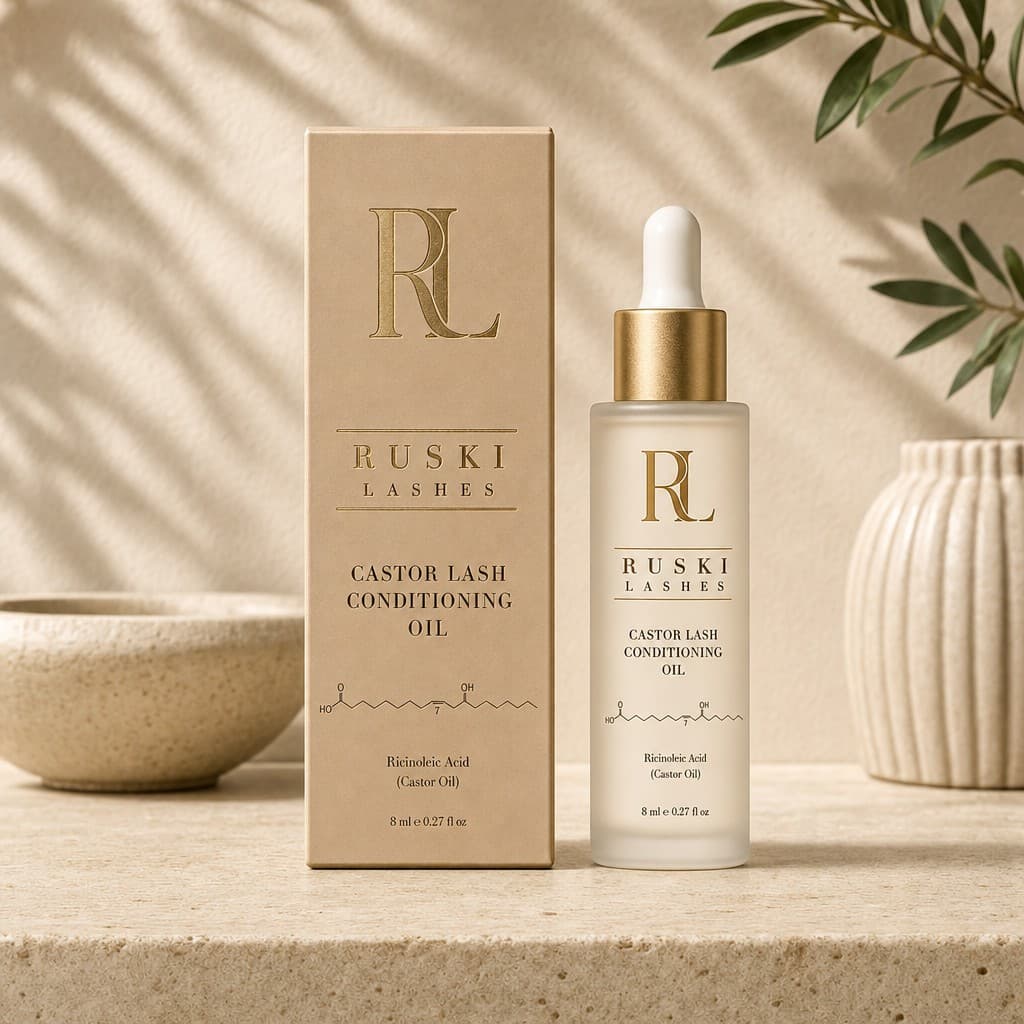
Castor Lash Conditioning Oil
Softness, shine & overnight nourishment
Natural active formulation
A weekly conditioning treatment for dry, coarse or brittle lashes and brows. A cold-pressed castor base with sunflower oil and squalane softens and adds shine overnight. Not for use with fresh extensions or lash adhesive; oils can affect retention.
Key actives
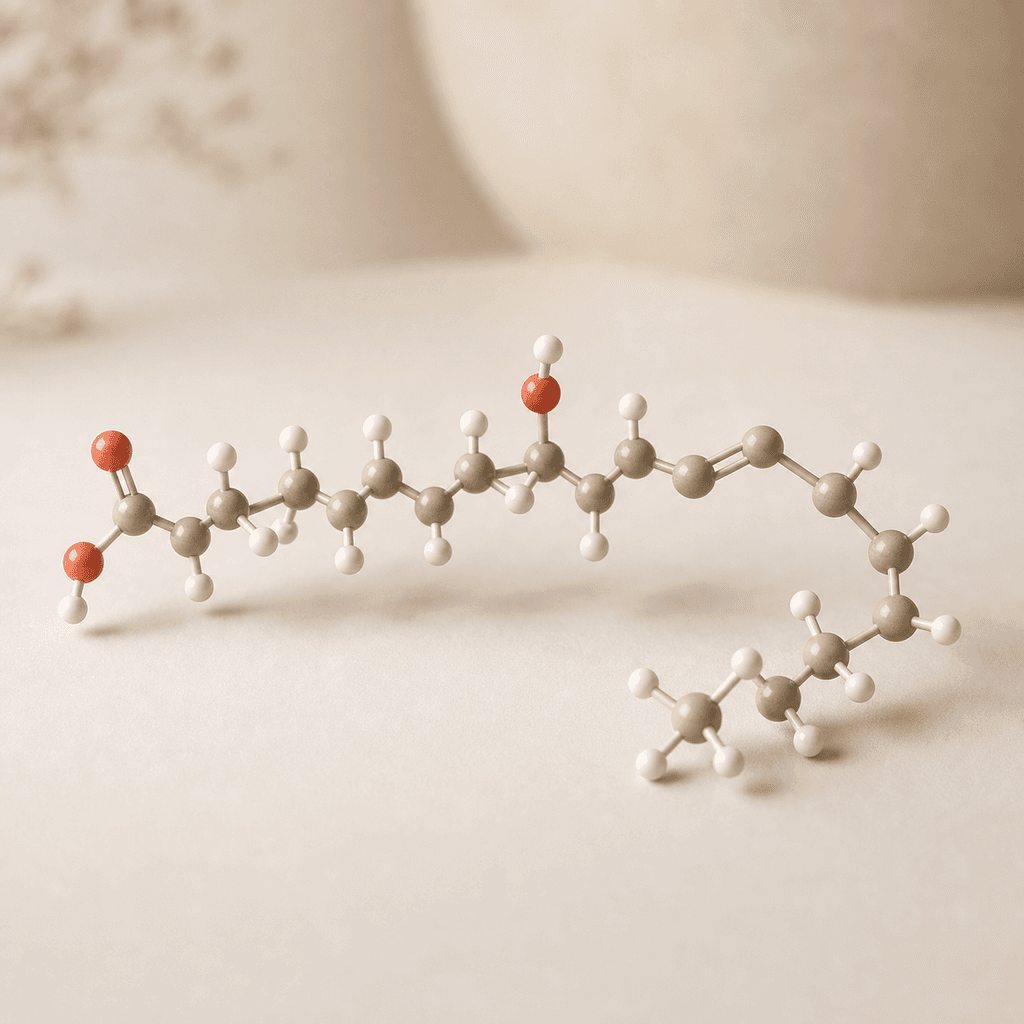
Ricinoleic acid
Ricinus Communis (Castor) Seed Oil · Squalane · Helianthus Annuus (Sunflower) Seed Oil
- Free from Water
- Free from Parabens
- Free from Fragrance
- Free from Sulfates
Online checkout is temporarily unavailable while final AUD pricing and Australian shipping rates are confirmed.
Enquire about availabilityWho it's for
Dry, coarse or brittle lashes and brows.
How to use
Apply weekly overnight with the wand. Not for use with fresh extensions or lash adhesive (oils can affect retention).
Full ingredient disclosure (INCI)
INCI means International Nomenclature of Cosmetic Ingredients: the standard names used on cosmetic labels worldwide.
Ricinus Communis (Castor) Seed Oil, Caprylic/Capric Triglyceride, Helianthus Annuus (Sunflower) Seed Oil, Squalane, Rosmarinus Officinalis (Rosemary) Leaf Extract, Tocopherol
Test data on file
- Base
- Cold-pressed castor + sunflower
- Prostaglandins
- None
- Use
- Weekly, overnight
Independent lab results stand behind every product, and we'll send any report on request, reference RL-NLO-001.
Built to the Ruski Standard
Ricinoleic acid (castor), held to the Ruski Standard
Castor seed oil is rich in ricinoleic acid, a hydroxylated C18 fatty acid that gives castor its distinctive conditioning slip. We use it (with squalane and sunflower) as a leave-on oil for the look of softer, nourished lashes, classic lipid care, not a peptide serum. Evidence for castor on lashes is largely traditional use and cosmetic consensus; controlled lash trials are limited. Keep oil away from extension adhesives if you wear bonded sets. Apply sparingly to clean lashes at night.
Read Ruski Standard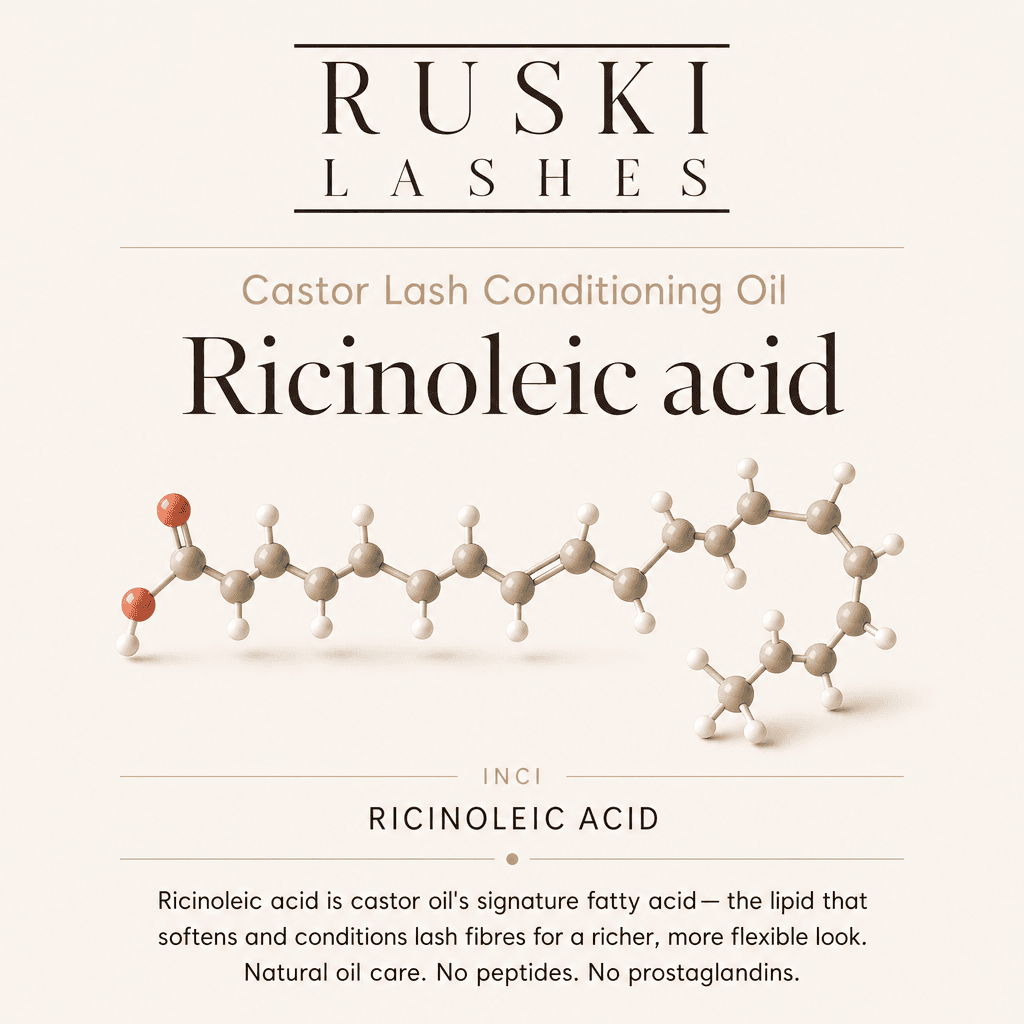
The formulation
Every ingredient earns its place. Here is each one: what it is, why it's in this formula, and what evidence supports it, including where that evidence is limited.
Cold-pressed castor oil · INCI: Ricinus Communis (Castor) Seed Oilactive
The hero lipid and base of the formula: a viscous, ricinoleic-acid-rich oil that coats the lash and brow fibre to soften dry, coarse or brittle hairs and leave a visible surface shine.
Cosmetic-science consensus supports castor oil (via ricinoleic acid) as an occlusive emollient that conditions and adds gloss to keratin fibres; there is no credible peer-reviewed evidence that castor oil changes lash biology or length, so its role here is conditioning and appearance only.
Fractionated coconut-derived ester oil · INCI: Caprylic/Capric Triglycerideemollient
A light, fast-spreading ester that thins the heavy castor base so the oil glides evenly along the lash without dragging, greasiness or clumping on the wand.
Established cosmetic-science consensus as a lightweight emollient and spreading/solvent agent widely used to modify the feel of heavier oils.
Sunflower seed oil · INCI: Helianthus Annuus (Sunflower) Seed Oilemollient
A high-linoleic-acid botanical oil that adds softness and supports the lipid film around the lash and brow hair, complementing the heavier castor base.
Peer-reviewed work on skin shows topical sunflower seed oil supports the lipid barrier and is well tolerated; independent evidence specifically in lashes is limited, so the benefit here is conditioning and appearance.
Squalane (plant-derived) · INCI: Squalaneemollient
A stable, biomimetic lightweight emollient that adds slip and lasting softness and helps the blend absorb without a heavy residue.
Cosmetic-science consensus recognises squalane as a skin-identical, oxidatively stable emollient valued for slip and non-greasy softening.
Rosemary leaf extract · INCI: Rosmarinus Officinalis (Rosemary) Leaf Extractantioxidant
A botanical antioxidant that helps protect the unsaturated oils in the blend from oxidation, keeping the anhydrous formula stable and fresh across its shelf and open life.
Peer-reviewed literature and cosmetic-science consensus support rosemary extract (carnosic and rosmarinic acids) as an effective antioxidant for stabilising cosmetic oils; this is a formulation-stability role, not a lash claim.
Vitamin E · INCI: Tocopherolantioxidant
A fat-soluble antioxidant that guards the oil blend against rancidity and contributes to the conditioning feel of the finished oil.
Well-established cosmetic-science consensus as an antioxidant used to protect lipid formulations from oxidation; conditioning contribution is consensus rather than lash-specific trial data.
Sources and limitations
Cosmetic-science consensus
SStrongCastor oil, through its ricinoleic acid content, functions as an occlusive emollient that conditions and adds shine to keratin fibres, with no credible evidence of a physiological effect on lash growth.
Cosmetic-science consensus on castor oil / ricinoleic acid as an occlusive emollient (e.g. standard cosmetic-ingredient and dermatology references)
Published study
SStrongTopical sunflower seed oil, rich in linoleic acid, supports the skin lipid barrier and is well tolerated on the skin.
Cosmetic-science consensus
SStrongSqualane is a skin-identical, oxidatively stable lightweight emollient valued for slip and non-greasy softening.
Cosmetic-science consensus on squalane as a biomimetic emollient
Cosmetic-science consensus
SStrongRosemary leaf extract (carnosic and rosmarinic acids) acts as an antioxidant that helps protect unsaturated cosmetic oils from oxidation.
Cosmetic-science consensus and antioxidant literature on rosemary extract for oil stabilisation
Cosmetic-science consensus
SStrongTocopherol (vitamin E) is a fat-soluble antioxidant used to protect lipid formulations from oxidation and rancidity.
Cosmetic-science consensus on tocopherol as a lipid-phase antioxidant
Manufacturer or supplier data
EEmergingThe castor base is specified as cold-pressed, a claim still to be substantiated by the supplier.
RUSKI Lashes supplier spec v9, SKU RL-NLO-001 ('Cold-pressed castor claim to substantiate')
Questions, answered
Can I use the Castor Lash Conditioning Oil with lash extensions?
No, this oil is not for use with fresh extensions or lash adhesive, because oils can weaken adhesive bonds and affect retention. It is designed for natural lashes and brows, and suits the weeks between extension sets or a break from them.
Is it suitable for sensitive eyes?
It is an anhydrous, water-free, fragrance-free oil with a short six-ingredient list chosen for the eye area, but because it sits close to the lash line we recommend a 48-hour patch test before first use. Apply a thin film with the wand and keep the product off the eye surface itself.
How does it fit into a lash routine?
Use it once a week, overnight, as a standalone conditioning step rather than layered under other products. Sweep a thin coat over clean, dry lashes and brows before bed, and keep it separate from any daytime serum or mascara, since oils and those products do not layer well together.
What should I expect from it, and when?
With regular weekly use, expect lashes and brows to look softer and glossier and feel less dry or brittle; the oil conditions the surface of the hair and adds shine rather than changing lash biology. Any performance figures are appearance-based and held in the third-party report panel (RL-NLO-001), available on request.
Does it contain prostaglandins?
No prostaglandin analogues appear in the disclosed INCI. This is a botanical lipid conditioner, not a product intended to change lash growth biology.
What is the difference between this oil and a peptide lash serum?
This is a weekly, water-free conditioning oil that softens and adds shine to the surface of the lash and brow, whereas the peptide serums are water-based daily treatments built around peptide technology. Reach for the oil when lashes or brows feel dry, coarse or brittle; it conditions the fibre rather than acting on lash biology.